
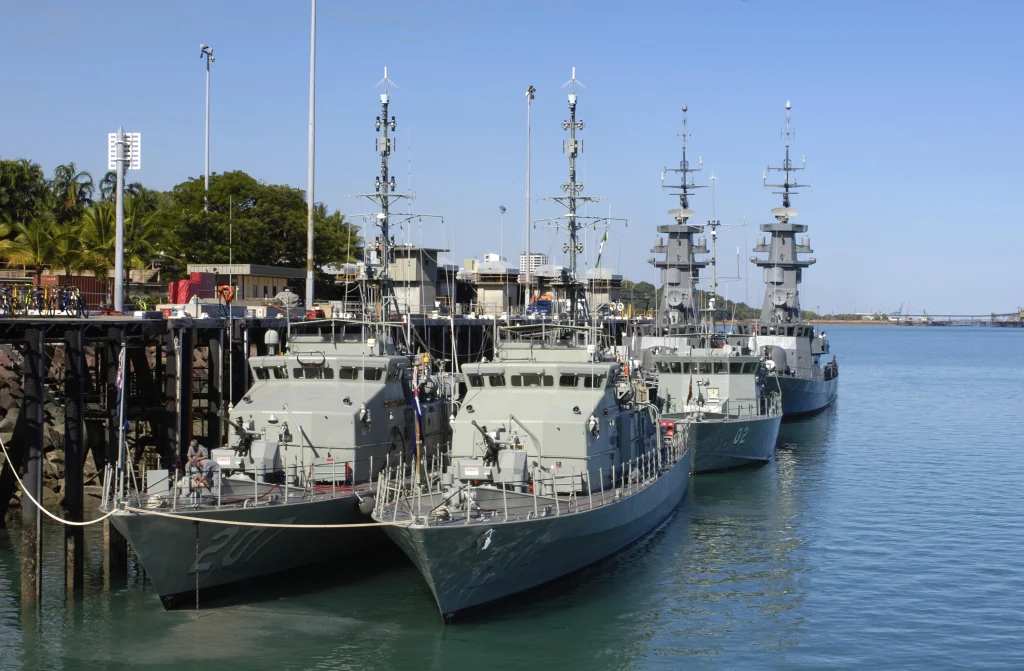
Stay compliant and efficient in 2026 with Seaforce’s expert guide to preventive marine maintenance for commercial fleets in Australian waters.
Operating a commercial fleet in Australian waters requires strong discipline and planning. Fleet operators must balance strict national regulations, harsh weather conditions, and the high costs of unexpected downtime. This 2026 guide presents a structured preventive marine maintenance plan designed for commercial vessels and supported by Seaforce’s expert services.
Understanding the Regulatory & Operational Landscape for 2026
Australia’s maritime framework places explicit responsibilities on owners and operators. Safety Management Systems, survey regimes, and equipment standards define how vessels are maintained, tested, and documented. Environmental obligations, including fuel quality, oil and waste management, and hull biofouling, require routine inspections and reliable records.
From an operational perspective, cyclones, heat, and heavy seas elevate the need for robust maintenance planning, particularly for propulsion, steering, power generation, lifesaving appliances, and pollution-prevention systems. Integrating these requirements into a single, auditable program ensures preventive marine maintenance supports both compliance and commercial objectives: fewer breakdowns, predictable costs, and assured readiness for survey.
Building Your “Preventive Marine Maintenance” Program
A fit-for-purpose program connects people, processes, and evidence. We support operators in establishing a clear framework built on asset risk, manufacturer guidance, and Australian standards—then executing it efficiently onboard and alongside.
Key inclusions:
• Asset register and criticality mapping: catalogue machinery, electrical systems, hull, safety, and navigation equipment; identify critical spares.
• Task library and intervals: translate OEM schedules and relevant standards into task cards with clear scopes and acceptance criteria.
• Smart scheduling: align hours-based and calendar-based work with operating profiles, port calls, and dry-dock windows.
• Records and verification: maintain logs, service reports, calibrations, and corrective actions to satisfy survey and audit.
• Competency and permits formalise training, isolations, hot-work, and confined-space controls.
• Digital enablement: implement a CMMS to trigger tasks, capture evidence, and track expiry dates.
2026 Calendar Highlights and Timing Tips for Commercial Fleets
Treat the year as a series of defined maintenance windows that respect operations and weather. Building early momentum reduces the risk of backlog and cost escalation later.
Planning cues and examples:
• Q1: Establish the baseline. Complete condition assessments, vibration and oil analysis, and update task intervals; schedule any propulsion or steering overhauls best performed outside severe-weather peaks.
• Q2: Safety and survey readiness. Service life rafts and lifejackets, verify EPIRB status, and audit firefighting systems; prepare documentation packs ahead of survey milestones.
• Q3: Hull and efficiency. Plan antifouling renewal or approved in-water cleaning where applicable; inspect sea chests, anodes, and shaft seals; confirm fuel and lube quality controls.
• Q4: Reliability for next year. Close corrective actions, reconcile inventory and critical spares, and complete a management review to refine the 2027 plan.
Ensuring Environmental and Safety Compliance Through Maintenance
Sustaining compliance depends on consistent, evidence-based maintenance supported by regular inspections and testing. Managing systems such as oily-water separators, waste handling, and biofouling control ensures operational efficiency, safety, and environmental responsibility. Seaforce strengthens this process through structured servicing, compliance audits, and expert support to help vessels meet requirements and pass inspections confidently.
Why Partner with Seaforce for Preventive Marine Maintenance
Seaforce delivers disciplined planning, skilled technicians, and transparent reporting that convert obligations into operational advantage. Our approach to preventive marine maintenance reduces failure risk, supports survey success, and improves lifecycle cost control—so your fleet remains safe, compliant, and productive throughout 2026 and beyond.
Contact us to arrange a tailored maintenance planning session or explore our services to see how we can support your next docking, inspection, or compliance milestone.
Related Blog Articles:
End-to-End Vessel Management and Repair: Ensuring Safety, Compliance & Reliability
Commercial Marine Services: Now Servicing All Major Australian Harbours & Marine Facilities